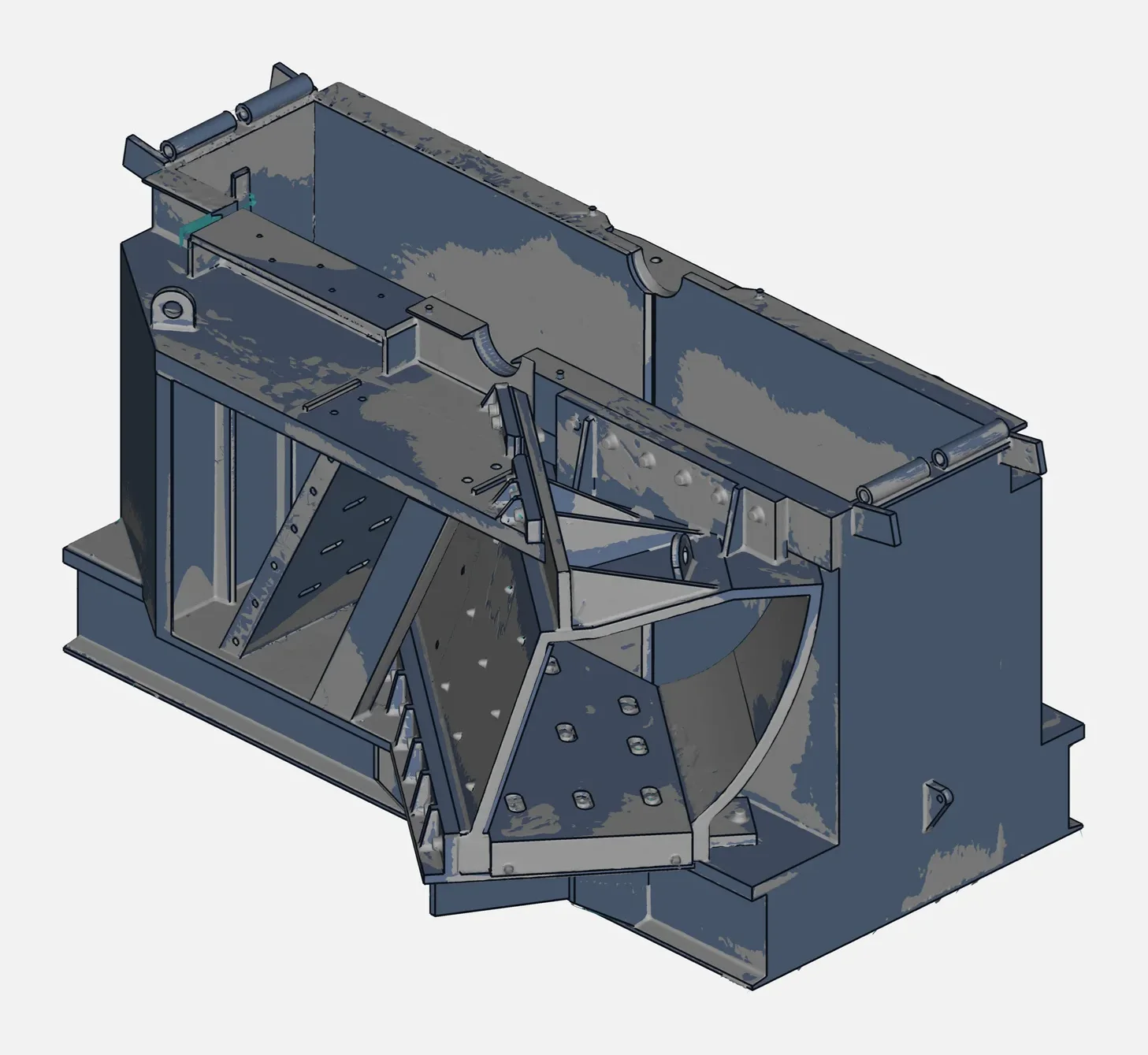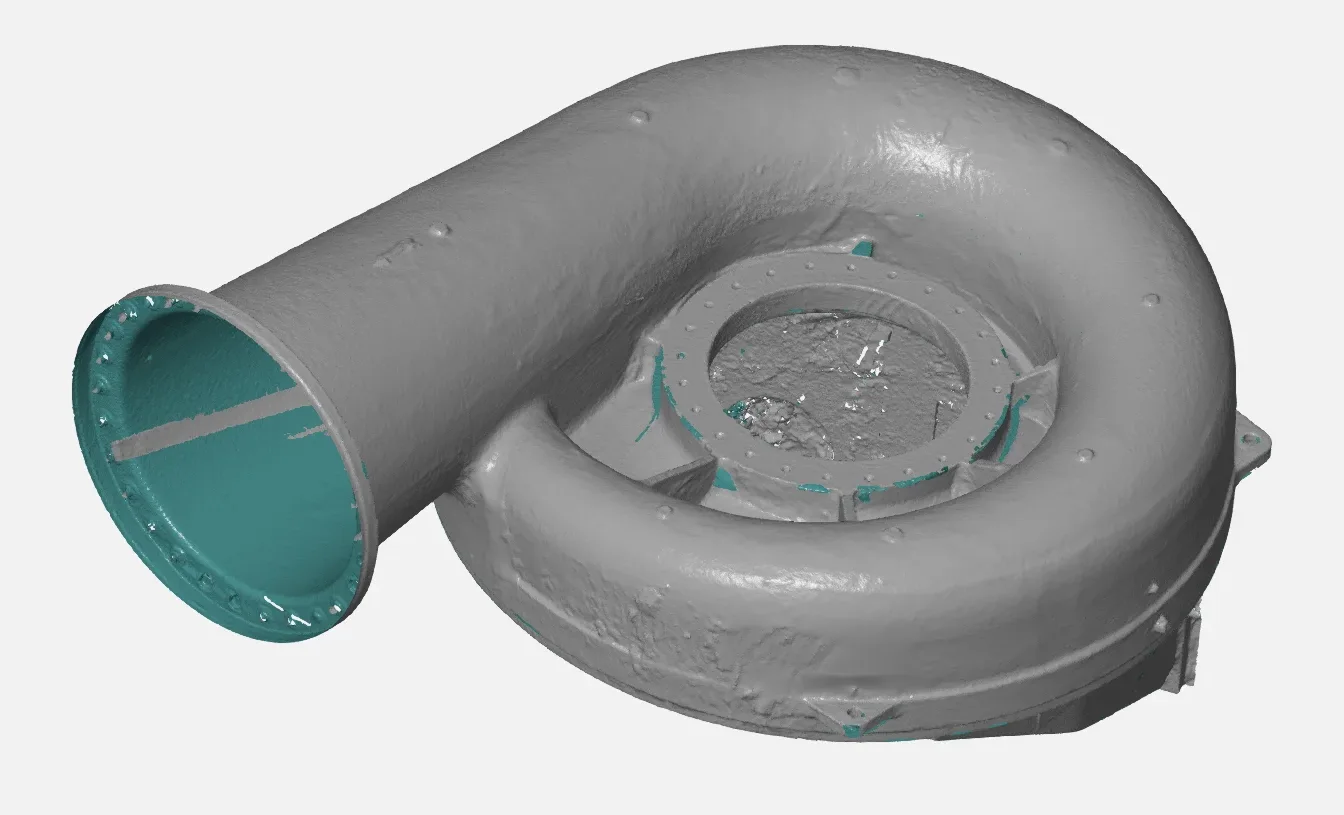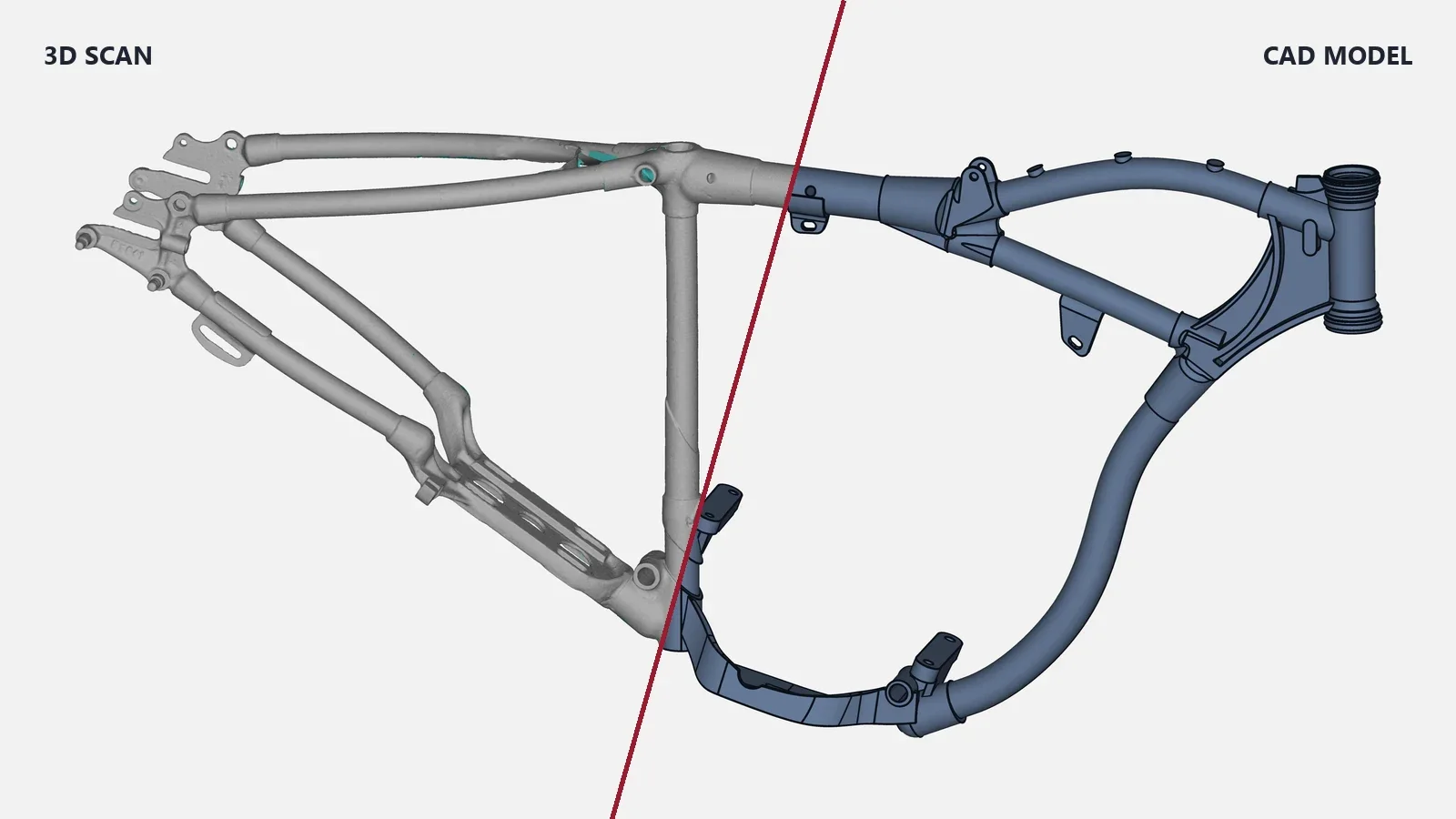
You have a part in your hand that works perfectly, or used to. The supplier has closed, the drawings are lost, or the part was hand-modified years ago and nobody recorded the changes. You need to make more of it, improve it, or build tooling around it. This is what reverse engineering solves.
In engineering, reverse engineering means measuring an existing physical object and rebuilding it as a digital CAD model that can be edited and manufactured. Today that almost always starts with 3D scanning.
Why companies reverse engineer parts
Across our projects in India and the UAE, the same reasons come up again and again:
- Legacy and obsolete parts. Pumps, gearboxes, crushers and older machines often have no CAD at all. When a part wears out, the only reference is the worn part.
- Supplier changes and localisation. Moving production to a new or local vendor needs a clean, complete model and drawing.
- Design improvement. Engineers want to strengthen a failure-prone area, add a mounting point, or switch material, starting from what already exists.
- Tooling, fixtures and moulds. Jigs and checking fixtures must match the real part, not the nominal design.
- Aftermarket and motorsport. Body panels, frames and brackets that have to fit an existing vehicle exactly.
How the process works
1. 3D scanning: capturing the real geometry
A high-resolution 3D scanner, such as a handheld blue-laser scanner, records millions of points across the surface. The result is a mesh (an STL file): an accurate digital copy of the part, including wear, casting texture and damage. Large parts such as vehicle bodies can be scanned on site.
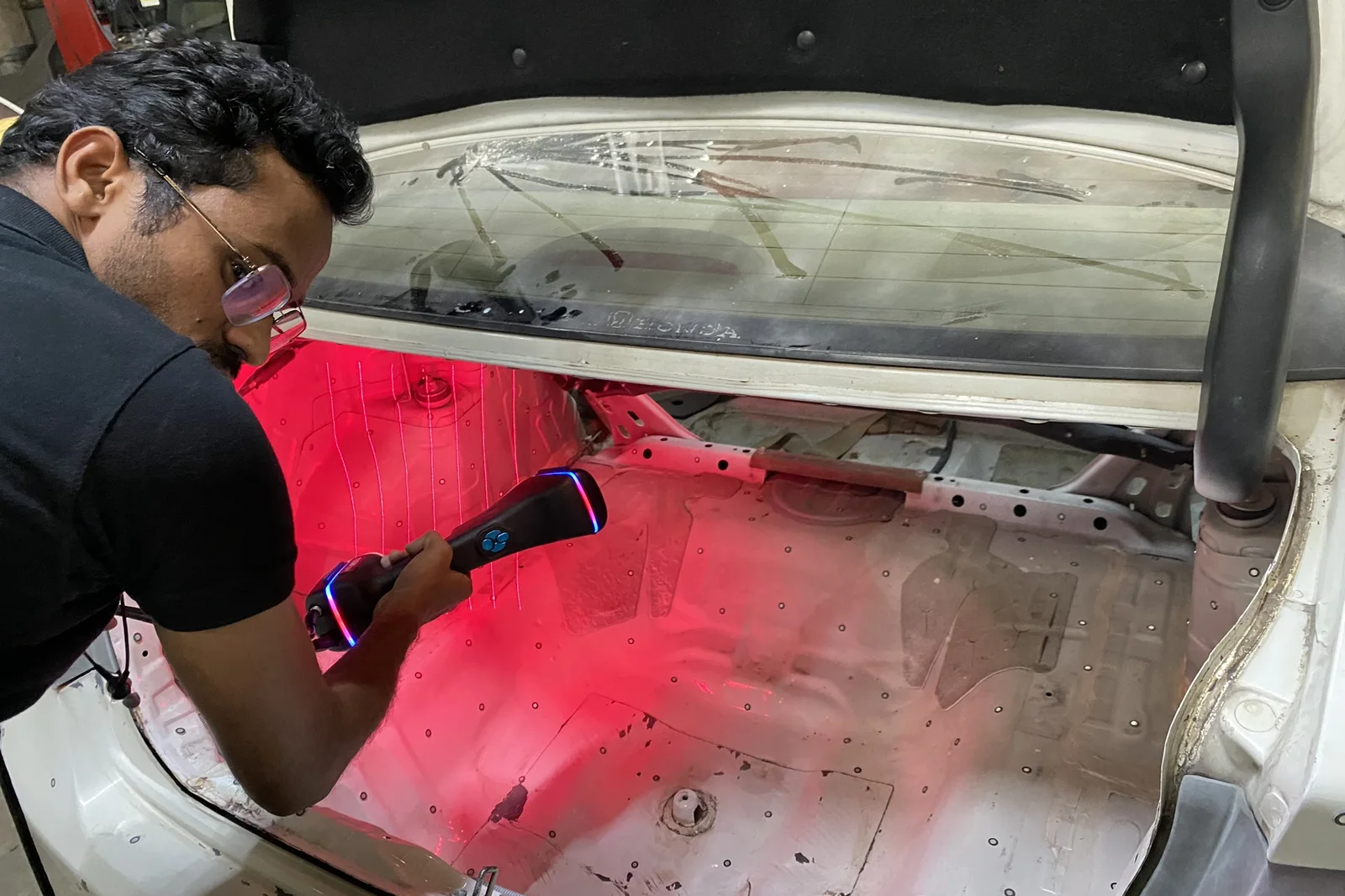
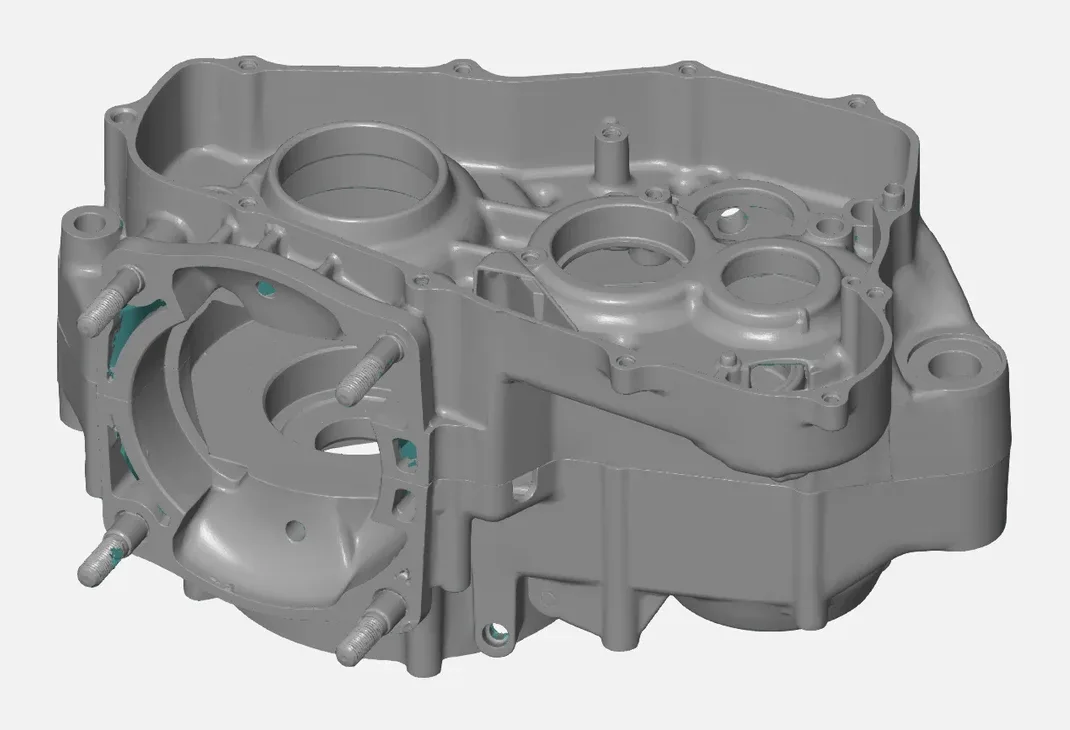
A scan is not CAD. It is made of millions of small triangles. You can measure it, but you can't easily change a hole diameter, add a fillet or send it to a CNC programmer. That is why the next step matters.
2. Modelling: turning the scan into usable CAD
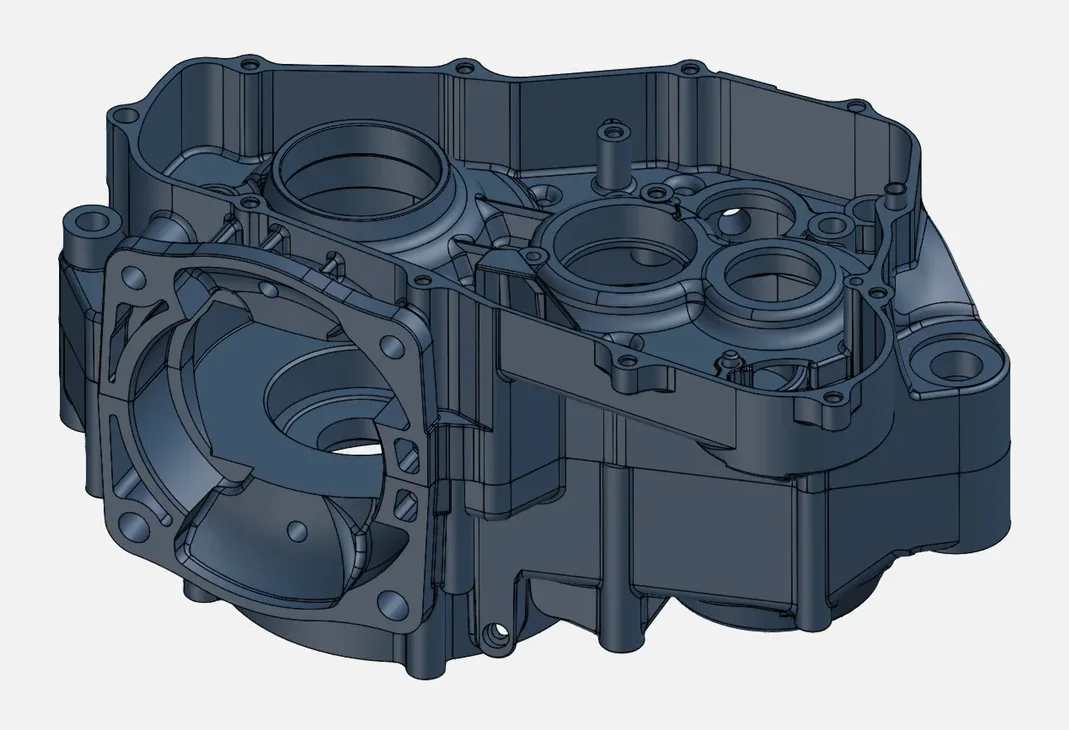
An engineer rebuilds the part in CAD software, using the scan as a precise reference. There are three common approaches, and choosing the right one is most of the job:
| Approach | What you get | Best for |
|---|---|---|
| Design-intent modelling | Clean parametric features: true cylinders, flat faces, exact hole sizes. Wear and casting imperfections are removed. | Machined parts, castings to re-manufacture, anything that needs drawings |
| Freeform (NURBS) surfacing | Smooth surfaces fitted closely to the scan, "as-is" | Body panels, ergonomic shapes, blades, organic forms |
| Hybrid | Prismatic features modelled to design intent; freeform areas surfaced to the scan | Most real-world parts, such as housings with both machined faces and cast curves |
3. Verification: comparing the CAD with the scan
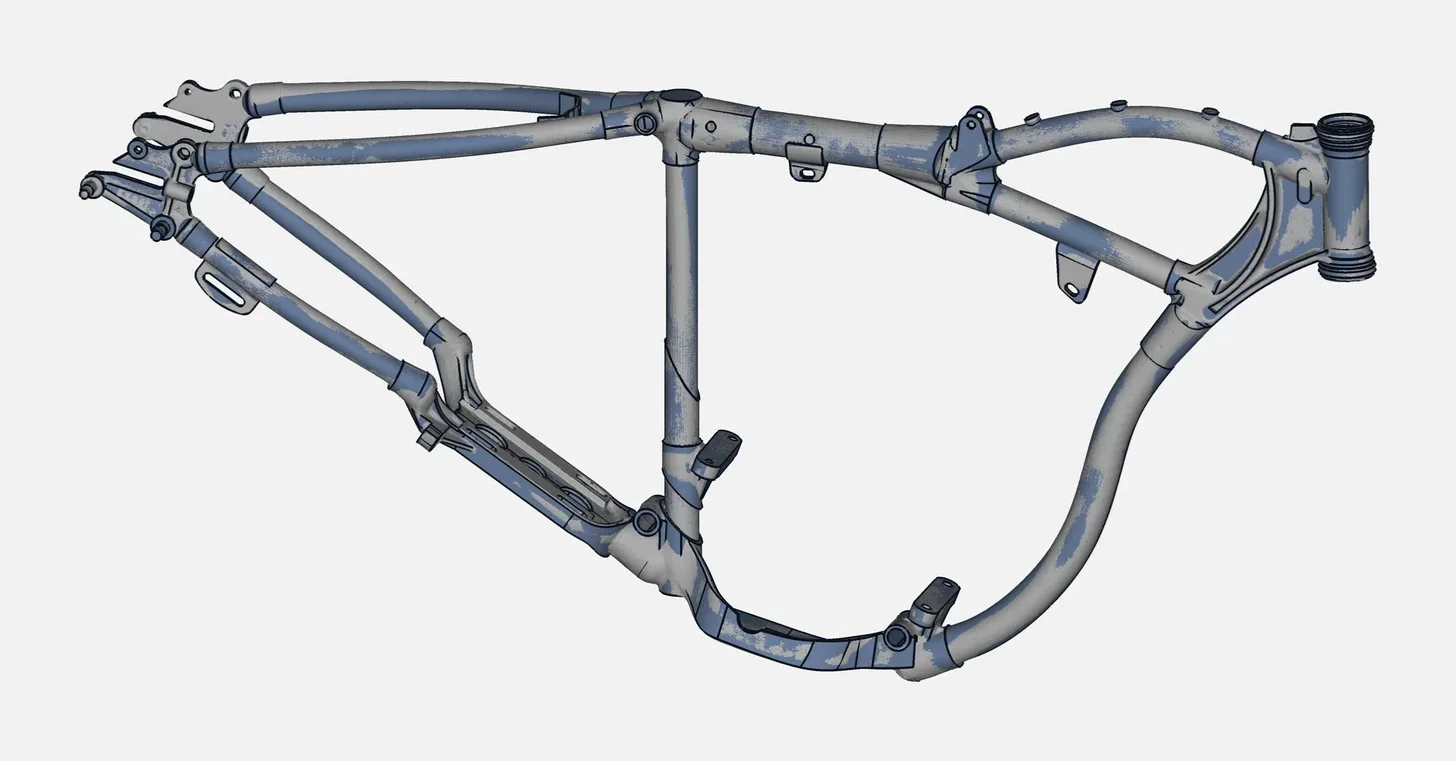
A good reverse engineering job always ends with a scan-to-CAD comparison. The CAD model is overlaid on the scan and the deviation is measured across the whole surface. This shows the model is faithful where it should be, and that deliberate corrections (such as removing wear) are where you intended.
4. Delivery
Typical deliverables include:
- Neutral CAD files (STEP, IGES, Parasolid and other common formats) that open in any major CAD system
- 2D manufacturing drawings with dimensions and GD&T, on request
- A deviation report showing how the CAD compares with the scan
- The original scan mesh (STL) for your records
What affects the cost and turnaround?
- Part size and complexity: a simple bracket might take hours; a full vehicle body or crusher frame can take weeks.
- Modelling approach: design-intent and hybrid modelling take more engineering time than freeform surfacing alone.
- Accuracy needs: tight tolerances may need more scan data and more verification.
- Drawings: fully dimensioned GD&T drawings add time.
- Access: large or installed parts may need on-site scanning.
The easiest way to get an estimate is to send photos of the part with rough dimensions. We usually reply within one working day.
Is reverse engineering legal?
Measuring a part you own for maintenance, repair or your own production is common practice. Copying a part protected by patents, registered designs or contracts is a different matter. If you're unsure, check with the original manufacturer or your legal adviser. We sign NDAs as standard and treat all client data as confidential.
Reverse engineering in India and the UAE
VShark Solutions is based in Coimbatore, one of India's major engineering and foundry hubs, and also works with clients across the UAE and the wider Gulf region. We have reverse engineered automotive frames and castings, pump and crusher components, consumer products and marine parts. See examples in our portfolio, or read about our reverse engineering service.